By Chioma Obinna
The Vice President, Senator Kashim Shettima had on the 2024 World Toilet Day launched the revised Clean Nigeria Campaign, CNC, Strategic Plan to eradicate open defecation by 2030, with nearly 48 million Nigerians still practicing open defecation. The CNC Strategic Plan aims to declare all 774 local government areas open defecation-free by the target.
The Vice President noted, “Access to safe and clean toilets is not just about infrastructure, it is about dignity, health, and safety for all Nigerians. We are committed to ensuring that no one falls behind in our journey to end open defecation, as evidenced by this strategic plan.
We urge all levels of government and partners to work collaboratively for this goal.” It will be recalled that former President Muhammadu Buhari in 2018 declared a State of Emergency in the Water, Sanitation and Hygiene Sector and in November 2019, Nigeria flagged off the Clean Nigeria: Use the Toilet Campaign backed by Executive Order 9, towards making Nigeria Open Defecation Free by 2025. Sadly, despite these efforts, Nigeria has long surpassed India as the world’s leading nation in open defecation.
With an estimated 48 million citizens or 23 per cent of the population still defecating openly, the alarming statistic underscores the urgent need for significant improvements in the nation’s sanitation infrastructure and public health awareness.
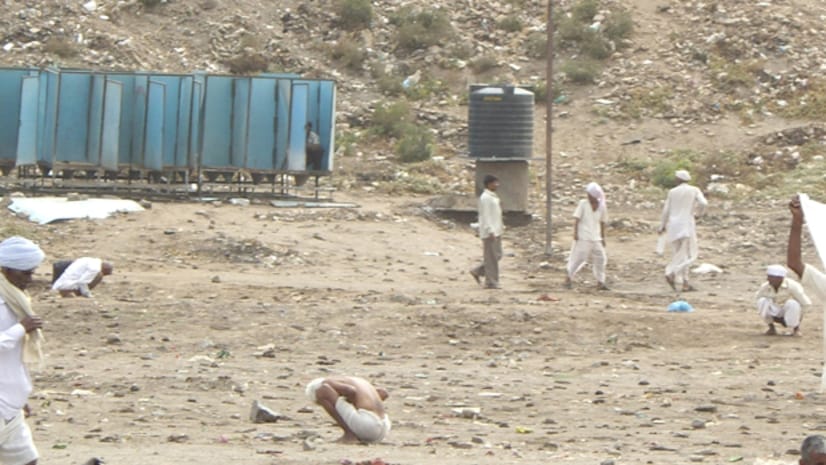
The use of toilets and washing hands with soap according to public health experts is key in keeping children, families and communities safe from disease outbreaks and good health. However, in Nigeria, open defecation remains a deeply ingrained practice.
From Lagos, Enugu, Rivers, Benue, Niger to Borno among other states except Jigawa, open defecation is widespread. Despite the increase in the number of people with access to basic sanitation services, the proportion of people practising open defecation has barely changed in the last five years with the number increasing from 46 million in 2019 to 48 million in 2021.
Findings have shown that going into the bush to defecate is a dangerous challenge as faeces left in the bushes, waterways and homes are major causes of disease outbreaks such as cholera, and diarrhoea. Apart from the fact that these practices expose children and family members to poor sanitation and hygienerelated illnesses, Nigeria’s target to end open defecation by 2025 may remain a mirage following the report of the 2021, WASH National Outcome Routine Mapping on Nigeria’s sanitation status.
The WASH report also revealed that about 1.3 per cent of GDP or N455 billion is lost annually due to poor access to sanitation, healthcare savings and productivity. These and other facts from the WASHNORM, also disclosed that only nine per cent of households have access to basic water, sanitation, and hygiene (WASH) services.
According to the report, the North-Central region emerges as the area with the highest prevalence of open defecation, followed by the South-West. While 44 per cent of households utilise basic sanitation services, the overall access to WASH services remains alarmingly low.
The prevalence of open defecation cuts across rural and urban areas, posing serious health risks, contributing to the spread of water-borne diseases and other illnesses. Further, WASHNORM 2021 report shows people in rural areas (31 per cent) are four times more likely to practice open defecation than those living in urban areas (eight per cent).
The poorest households (48 per cent) are 48 times more likely to practice open defecation than the richest households (one per cent), while 46 per cent of the population were found to have access to basic sanitation services in 2021 compared to 44 per cent in 2019, representing a two per cent (6.9 million) increase in the number of persons accessing basic sanitation services.
Of the number of people using at least a basic sanitation facility, 18 per cent use safely managed sanitation services. According to the WASHNORM report, states with the highest open defecation rate are; Ebonyi— 73 per cent, Plateau— 56 per cent, Kogi — 56 per cent, Oyo— 54 per cent, Kwara —50 per cent, Kebbi —50 per cent, Enugu —48 per cent, Niger — 46 per cent, Nassarawa —46 per cent, Benue —45 per cent, and Bayelsa, 45 per cent.
OD-free LGAs
According to a UNICEF WASH Specialist, Mr. Monday Johnson, barely two years to the country’s 2025 target, as of August 31, 2023, only a total of 105 LGAs out of the 774 LGAs are open defecation free, (ODF) with Jigawa State leading with 27 LGAs. Others are; Anambra-1, Akwa -Ibom-1, Bauchi-8, Benue-9, Borno-2, Cross-Rivers- 6, Kano-11, Kaduna-7, Katsina-25, Osun-1, Yobe-1, Zamfara-3, and Imo-1. Nigeria has a roadmap for ODF and some states have adopted it. sadly, many state governments who have adopted it are yet to mobilise resources and implement the plan just like India did. Vanguard’s investigations showed that a lot of the perpetrators were male, usually commercial motorcycle riders commonly known as ‘Okada’, and migrant traders. The perpetrators were usually seen carrying bottles of water or sachet water, as the discarded containers have taken over the divide on the express ways.
A visit to some of the open defecation prone areas in Lagos revealed that ongoing road construction has reduced the practice as many of those engaged in it, do so early in the morning or at night. Monica, a fruit trader who spoke to our reporter, painted a grim picture: “We are breathing a bit of fresh air because of the road construction. During the day, you will see a lot of people, especially men, with bottled or sachet water going to defecate.
“They are not ashamed, they just stay by the side of the bushes and defecate. Most of them are drivers, others are okada riders. They are the ones that openly defecate along the road.” It was gatehered that other notorious areas for open defecation along that axis include Oluti and Alakija in Lagos. Touts who live under the bridges at Oluti and Alakija bridges, Lagos have turned the area into their personal toilets since there are no public toilets in those places.
Further findings showed that the practice peaks at night. “Before, it used to be during the day but right now, there’s construction along the road and the bushes are dried. So, they can’t hide easily like they used to do. “During the rainy season, it was so bad that it was difficult to walk around the area. On the stretch of the road, while you are driving or inside a commercial vehicle, you would see 10 to 15 people at different spots along that axis, defecating.
“This is why they used to call this part of the road ‘shit island’, because when there’s traffic, and people are trekking, some will be stepping on faeces. It is an eyesore,” Monica noted. During the dry season, most of the faeces may have dried up but the environmental impact remains evident. At the busy Mile 2 bus stop, Lagos, despite having three toilets, open defecation thrives.
The condition of the toilets is far from acceptable. When this reporter visited, some toilets had been removed due to construction work nearby. One toilet built by the Lagos State government is still operational but its condition is more harmful to the environment than beneficial. The foul smell from the facility puts off potential users. Though the facility lacks a proper sewage system, users are required to pay a fee of N200. In one corner of the toilet is a shallow hole where the faeces are collected but there is no adequate waste disposal system in place. Each night, waste water is sprayed around the toilet area, and despite the high volume of users, the waste has not been cleared in the past three months.
At Ashapo Garage, access to clean and functioning toilets remains both a challenge and a necessity. Despite the construction of a few public and private toilets in the area, issues with maintenance, waste management, and government support persist. Sanitation gaps The park currently has three operational toilets.
According to Dauda, a caretaker at the garage, these facilities are vital for travellers, drivers, and park users but managing the waste generated daily is a daunting task. “I use chemicals to reduce the smell and empty the septic tanks three times a month. We try our best to ensure that waste and water don’t mix, but it’s not easy without proper infrastructure,” Dauda lamented. Despite ongoing efforts, limited resources and inconsistent waste disposal services make it difficult to maintain the area properly. Access to water is currently another major issue.
The park does not have reliable water supply, and this compels workers to create temporary fixes, such as digging holes to drain bathroom water. It is clear that many people who use the park rely on its facilities, yet there is noticeable lack of government support. It is common in most state capitals across the country. Dauda said further: “The government promised to repair and build more toilets, but nothing has been done. If they would commit, we could solve these issues quickly.
If people don’t have access to toilets here, they are forced to go outside, and that creates a health risk for everyone. But some people don’t like to pay to use the toilet but we are trying our best.
My boss who is a politician, has promised he will come and fix the place. I am just managing the place. We have about six rings we use to remove the water from the bathroom in the night so that before daybreak, it will be dry.” He said a major problem is the fact that tanker drivers were no longer coming to pack the faeces, thereby making the small soakaway fill up in no time. “I am just digging the place to reduce it,” he lamented. Asked why some people don’t use the toilets, Dauda said some could not afford the fees, while others prefer to practice open defecation, addng that the state of the toilets discourage others, especially women. At Benin Bus terminal also at Mile 2, also in Lagos, some travellers who decried the environmental condition of the area, said open defection is no longer a new thing in the area. In the words of Mrs. Geraldine Esu: “I cannot us he public toilet because of my safety. We have lots of armed robbery cases around here. As a lady, you may be harassed. The fee attached to the toilet is too much and there are not enough here. Many people cannot afford to pay N200 for just a toilet.” The situation, however, confirmed the 2021 report of WASH National Outcome Routine Mapping or WASHNORM, which says only about 33 per cent of markets and motor parks have access to basic water supply services.
The report also noted that only 20 per cent of markets and motor parks have improved water supply facilities within the premises that are accessible to people living with disabilities. Similarly, it said one out of five markets and motor parks (20 per cent ) have access to basic sanitation services, while only eight per cent of markets and motor parks have access to basic hygiene services. It further showed that in Lagos, only 35 per cent have access to basic hygiene services. Another woman, Gladys Ekpo, told Vanguard that there were a few mobile toilets around but noted that most of the operators are not friendly. Further findings revealed that people defecate in the open due to the cost of using the toilet facilities. However, apart from the Badagry and Oshodi-Apapa expressways, open defecation also happens along the Lagos- Ibadan expressway. Driving along the expressway, it is common to see people defecating by the gutters that divides the opposing traffic lanes of the highway. Also, along the railway line on Agege Motor Road, open defecation is done in full glare. Precisely beside Ikeja Local Government Council secretariat and the newly constructed bridge, the practice also thrives. Although policemen currently stationed around the end of the newly constructed bridge are helping to reduce the level of open defecation in the area, the practice persists.
In Ikorodu Local Government Area, while some mobile toilets were abandoned, public facilities managed by market and motor park leaders charge as little as N100 to urinate and N200 to defecate. However, abandoned buildings in certain communities are often used as toilets. Speaking with Mummy Kafaya, who works in one of the toilet facilities in Sabo Market, she said the market has more than five public toilets accessible to vendors and customers. However, she denied that faeces found in the drainage often came from individuals during the night, possibly passersby or street urchins. She emphasised that only government intervention could effectively address the issue of open defecation since access to the market is restricted after some hours. The open defecation challenge in Lagos is almost the same thing in other major cities in the country, including Abuja. In the Berger Area, Area 1 and many others in Abuja, the situation is about the same thing as feaces are seen early in the morning. In Suleja, Niger State, Mowe in Ogun State, it is also a common practice.
Open defecation burden
As Nigeria approaches its 2025 deadline to end open defecation, the issue remains significant. From the WASHNORM 2021 survey, as many as 48 million Nigerians or 23 per cent of the population still practice open defecation. Furthermore, only 17 per cent of households have access to basic hygiene services, and just eight per cent of household heads can demonstrate proper handwashing.
The data from WASHNORM 2021, when compared with data from NORM 2018 and NORM 2019, clearly showed that only the achievement of results at scale will make any significant difference in the WASH sector and move the country towards achieving SDG-6. Nigeria, in a bid to attain open defecation-free status by 2025, in 2019 flagged off “Clean Nigeria: Use the Toilet Campaign”. However, Lagos State Government had in 2022, announced it had constructed over 167 public toilets in designated areas and registered over 635 public toilet operators as part of efforts to prevent open defecation.
The Permanent Secretary, Office of Environmental Services, Dr. Tajudeen Gaji, said the state is determined to end open defecation and other sanitation challenges through the construction of new toilets at various strategic locations, such as motor parks, markets and densely populated areas, across the state. But this may remain a mirage. The Ogun State government also recently announced building public toilets. Open defecation as public health concerns Public health experts expressed concerns about the dangers of open defection on human health. An Associate Professor of Public Health and epidemiologist at the University of Benin, UBTH, Dr. Andrew Obi, raised critical concerns about the widespread practice of open defecation and its impact on health and the environment, saying such practice contributes to the continuous outbreak of cholera in some parts of the country.
In a chat with Vanguard, Obi lamented the detrimental effects of the practice, particularly, in rural areas, where access to proper sanitation facilities remained limited. He said open defecation posed significant health risks, particularly the spread of faecal-oral diseases, such as cholera, diarrhoea, and typhoid fever, which were commonly transmitted through contaminated water sources. While noting that open defecation exacerbates the health burden in communities with limited access to clean water, Obi said: “Open defecation promotes the spread of disease conditions that are transmitted not just because of poor personal hygiene measures but also because of continuous contamination of water bodies. “Apart from the aesthetic devaluing it poses to the environment in terms of environmental degradation. Open defecation promotes the spread of what we call fecaloral transmitted disease conditions like cholera and different forms of diarrheal diseases. ‘’Apart from cholera and diarrheal diseases, it can also promote the spread of other disease conditions like typhoid fever. I know as a journalist, you are aware that in the recent past, we have been battling with cholera.
“These are disease conditions that are transmitted not just because of poor personal hygiene measures but because of continuous contamination of water bodies. And we know in this part of the world, we have challenges with potable water, especially in rural areas where most of our surface water bodies are the predominant source of drinking water and many other various usages. “For open defecation, you have a lot of microbes that can generate disease conditions like diarrhoea, cholera diseases that can be detrimental to health and well-being of the people.” He said the environmental impact of open defecation is also a concern, as it leads to the degradation of ecosystems. “The aesthetic devaluation it poses to the environment is very clear in terms of smells and putrefaction.
Additionally, open defecation can contribute to agricultural contamination, as faecal matter is sometimes used as organic manure for crops, increasing the risk of foodborne diseases.”
Root causes
Obi identified poverty as a key driver of open defecation, noting that many people lacked the financial means to access proper sanitation. “What open defecation means is that this is an unsanitary form of waste disposal. In rural areas, where surface water is often the primary source of drinking water, the practice of open defecation compounds the risks to public health. To address this issue, Obi advocated a multifaceted approach that combines government intervention with active community engagement, calling for the crucial need for robust public awareness campaigns to educate the public about the grave dangers of open defecation. Innovative solutions for waste management Obi spoke about the Ventilated Improved Pit, VIP, latrine systems, which were designed to reduce human exposure to waste in rural settings. “Several years ago, there was a modification of what we know as the pit latrine system, which is very common in our rural setting. They call it the VIP, (ventilated improved pit latrine systems.) The mindset behind that method of faecal waste disposal is to minimise to the barest minimum physical contact with human faces. ‘’Now, we have different forms of commercialised latrine system. When you go to parties, you see all these commercialised latrines, they call them chemical cruises that are being pushed around. But the issue is that most times people may not have access.
“So governments and people who mean well for the community can set up such systems around and manage it in such a way that when they are full, they are moved away to where they can be decontaminated, properly treated, and discarded. “Governments and organisations can set up these systems and manage them properly so that when they are full, they are moved to be decontaminated, treated, and discarded. People should also be encouraged, who have the wherewithal in terms of finances, to be able to build water systems, what we call the water closet systems where you have the sock away.’’ Public toilets and maintenance He said while public toilets have been seen as a potential solution to the sanitation crisis, their sustainability remained a big challenge, explaining that setting up public toilets without a reliable and regular water supply often led to their becoming environmental hazards. “Public toilets are a good strategy, but they must be properly managed,” he asserted.
Obi recommended that public toilets be linked to consistent water sources and integrated into a broader sewage and waste management system. The Associate professor maintained that solving the open defecation problem required both policy action and community involvement. ‘’We need to drive policy into action. A lot of policies have been put in place to sensitise people on the need for sanitary waste management, but we need to implement these policies effectively,” he insisted.
More investment needed — UNICEF
In the view of the United Nations Children’s Fund, UNICEF, Representative in Nigeria, Cristian Munduate, with over 48 million Nigerians still defecating in the open, progress made in the sector is not yet enough. She said Lagos and other states in Nigeria could end open defecation if enough investment and commitment were made to the water and sanitation sector.
Munduate lamented that the practice of open defecation continued to pose a grave public health threat in Nigeria, undermining progress in nutrition, sanitation and economic development. According to her, despite significant strides, over 40 million Nigerians still lack access to proper sanitation, exposing them and their communities to preventable diseases such as cholera, diarrhoea and typhoid fever. “Lagos still has problems of open defecation, and the challenge is the concentration of the population, so there is no surprise that this year, the first outbreak of cholera was in Lagos. “Open defecation contributes directly to malnutrition in children. A well-fed child can easily succumb to malnutrition if recurrent diarrhoea weakens their body, while malnourished children who contract diarrhoea face even greater health risks, often leading to death. ‘’The link between poor sanitation and waterborne diseases like cholera is clear: Contaminated water sources become breeding grounds for outbreaks, particularly during the rainy season when floods spread human waste into water supplies,’’ she said.
Munduate regretted that the economic burden of treating preventable diseases was staggering as treating a cholera patient could cost five to 10 times more than the investment required to provide basic sanitation facilities for a household. She added: “The inability to work due to illness reduces productivity and hampers economic growth, while families are left to grapple with the devastating consequences of losing loved ones to preventable diseases.” She lamented that women were most hit as the lack of secure sanitation facilities exposes them to risks of sexual assault and strips them of dignity and privacy. “Jigawa State has set a remarkable example by achieving 100 per cent open defecation-free status. This milestone was accomplished through strong leadership, government commitment, and targeted funding,’’ the UNICEF representative said. She insisted that Jigawa’s success demonstrated that with prioritisation and political will, other states could follow suit. Acknowledging the technical and operational support provided by UNICEF, Munduate said the agency cannot achieve the goal alone. “Governments at all levels must take accountability and scale up efforts to eradicate open defecation.
This requires collaboration among families, local leaders, religious institutions, and traditional rulers to educate communities and promote sustainable sanitation practices.” She stated that simple solutions, such as the construction of basic latrines, could make a difference as open defecation does not require sophisticated technology or massive financial investments but strategic actions. But like Jigawa, other states can end open defecation and prevent future health crises, and Nigerians need to understand the life-threatening consequences of the practice, from the contamination of food and water to the devastating spread of diseases, such as cholera. Stakeholders believe that leaders must prioritise sanitation as a fundamental right, mobilise resources, and work collectively to protect public health.
RC: VANGUARD