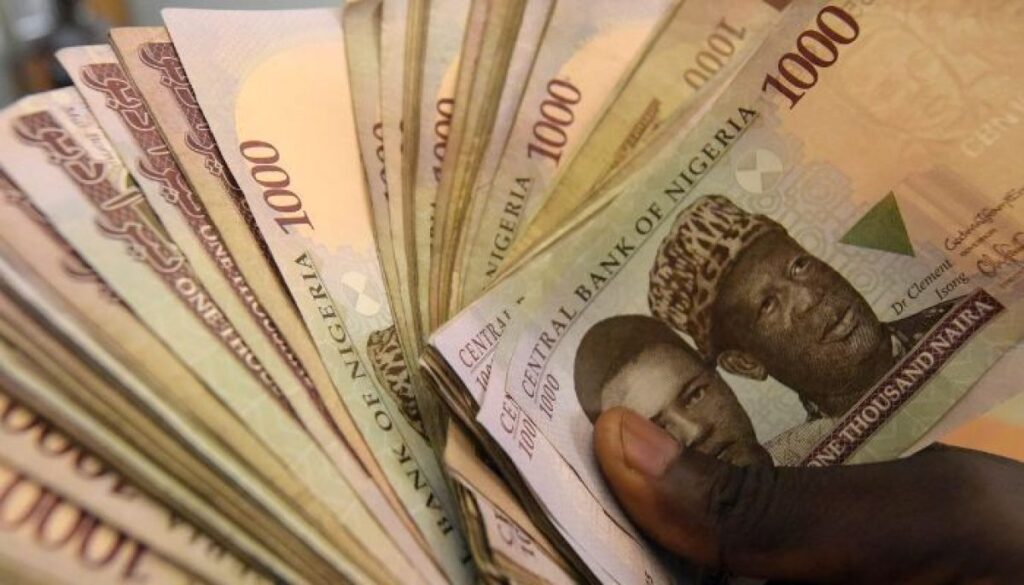
Cash scarcity has been a reoccurring challenge for many Nigerians since the aborted Naira redesign policy introduced in the last quarter of 2023 by the Central Bank of Nigeria, CBN.
The manifestations of this challenge include cash rationing by banks; lack of cash at ATM points; long queues for cash in banks and ATM points; increasing cash selling activities by merchants like petrol stations and supermarkets resulting in the dearth of cash deposits in banks; and increasing dependence on PoS agents for cash needs.
While the reoccurrence of cash scarcity has impacted most Nigerians in many severe ways, it has emerged that a major victim of the challenge is the Micro Small and Medium Enterprises, MSMEs, segment of the economy.
This critical segment is globally regarded as the engine growth of the economy. Nigeria has 96,000 MSMEs which contribute 48 per cent to its Gross Domestic Product, GDP, and 84 per cent of employment.
Most MSMEs in Nigeria are in the informal sector and in the rural areas where cash is the dominant form of payment. Also, for affordability of their target customers, majority of these businesses sell their products in micro units with low prices like N50, N100 and N200. These features make cash critical to the proper functioning of MSMEs.
As a result, the reoccurring problem of cash scarcity exerted severe constraints of the sales, profitability of the MSMEs and the welfare of their owners.
Due to cash scarcity many Nigerians had to reduce or postpone purchase of many goods and services. As a result, micro businesses recorded lower sales and decline in revenue.
On the other hand, MSMEs had to buy cash from PoS agents to sustain their businesses. On account of this additional cost plus the decline in revenue, a lot of MSMEs recorded losses, with negative impact on the welfare of the owners and their families.
A major feature of MSMEs is that most of them rely on loans, especially cooperative loans. Particularly worrisome is the fact that apart from the negative impact of cash scarcity on their revenue and profitability, those who took loans find it challenging to repay same, while some could not access the loan needed to maintain their businesses.
Also most MSMEs operate in the formal sector of the economy with little or no access to financial services. Hence, they are one of the major targets of efforts to increase financial inclusion. The reoccurrence of cash scarcity, however, undermines these efforts because it discourages MSMEs owners from patronizing banking services. In fact, there is increasing distrust and lack of confidence in banking services among MSMEs due to cash rationing and energy dissipated in long queues at bank branches and ATMs just to access cash.
Consequently, a lot of these businesses and Nigerians have resorted to keeping cash at homes instead of depositing them with the banks, a practice which not only undermines efforts to bring them into the formal financial system, but also exposes them to crime like burglary and robberies.
Given that MSMEs contribute almost half of the nation’s GDP, the severe impact of cash scarcity on their operations is reflected in the fall in the GDP growth of the economy to 2.3 per cent in the first quarter of 2023 from 3.11 per cent in the corresponding period of 2022, Q1’22 and from 3.52 per cent in the preceding quarter, Q4’22.
As a result, many notable Organised Private Sector, OPS, groups, including the Nigerian Association of Small-Scale Industrialists and Association of Small Business Owners of Nigeria, ASBON, have called on the CBN to address the reoccurring challenge of cash scarcity.
But even as the CBN is already addressing this challenge by sanctioning some banks for lack of cash in their ATMs during the yuletide period, we call on the apex bank to also intensify efforts in collaborating with the security agencies to achieve this purpose. It should in this regard embark on massive crackdown of individuals and organisations driving the reoccurring challenge of cash scarcity in the country.“
RC: VANGUARD